
The world of decentralized finance (Defi) is growing exponentially, with multiple ecosystems offering various services to its users. In such a fertile scenario, it can be quite a challenge to understand each platform’s unique functionality. Today, our focus will be on Uniswap, arguably one of the most influential players in the DeFi space.
Introducting Uniswap
Uniswap is an Ethereum-based Defi protocol that allows users to trade ERC20 tokens directly, without the need for an intermediary. Unlike centralized exchanges that rely on order books to match buyers and sellers, Uniswap uses pools of tokens supplied by liquidity providers to facilitate trades.
How Uniswap Works
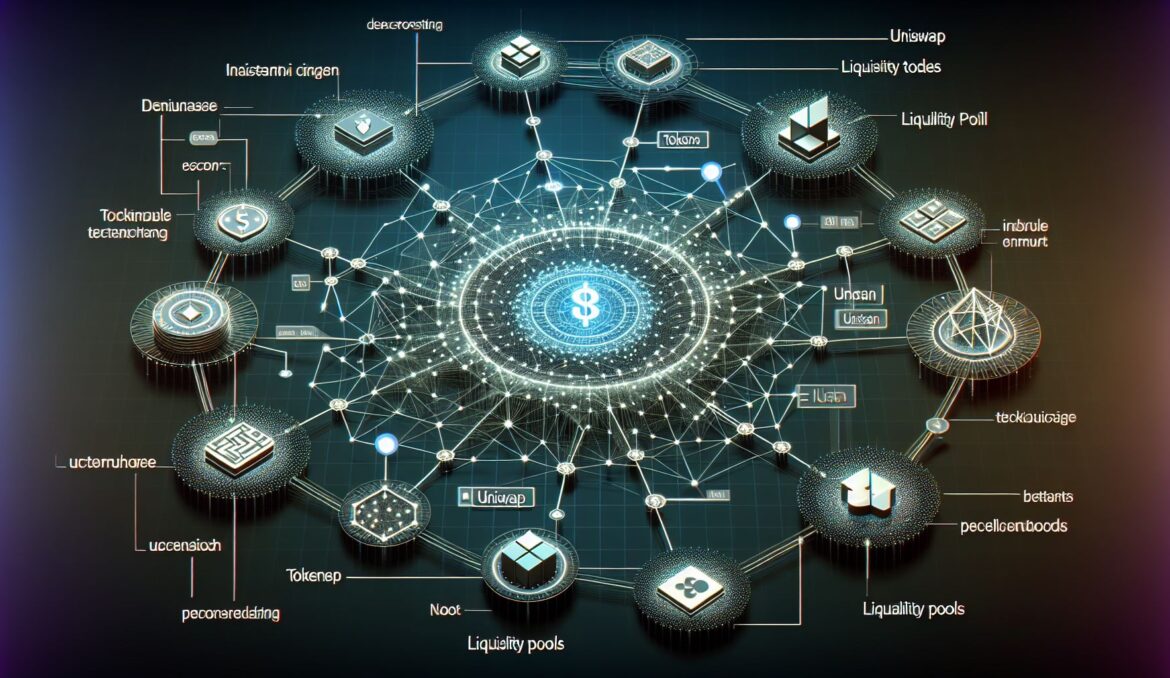
At the heart of the Uniswap ecosystem lies the mechanism of liquidity pools. Users can contribute an equal value of two tokens to create a liquidity pool. These pools facilitate token trading against each pair, and in return, the original liquidity provider earns fees on trades.
Automated Market Maker (AMM)
Uniquely, Uniswap employs the Automated Market Maker (AMM) model. With AMM, buyers and sellers trade against liquidity pools instead of directly with each other. This system ensures uninterrupted trading, regardless of the order size or frequency.
Governance in Uniswap
Governance is another highlight feature of Uniswap. The protocol launched its native utility token, UNI, in September 2020 with the intent of decentralizing the decision-making process. UNI token holders have the right to participate in governance votes to shape the future of the protocol.
The potential and risks of Uniswap
Uniswap brings the promise of uncensored and decentralized trading to its users. It offers an open platform for anyone with an internet connection to explore financial services. Liquidity providers have the opportunity to earn a steady income through trading fees.
Despite substantial opportunities, Uniswap also carries risks. For instance, there’s ‘impermanent loss,’ where providing liquidity for volatile assets could lead to a loss in comparison to just holding those assets.
Conclusion
Uniswap has irrefutably revolutionized the trading of ERC20 tokens. Its progressive model has opened the doors for a truly democratic financial ecosystem. However, as with any financial endeavor, users should be cautious and understand the potential risks involved before diving in. Nonetheless, Uniswap’s potential to reshape the DeFi landscape cannot be underestimated, making it a fascinating subject for us to stay tuned to.