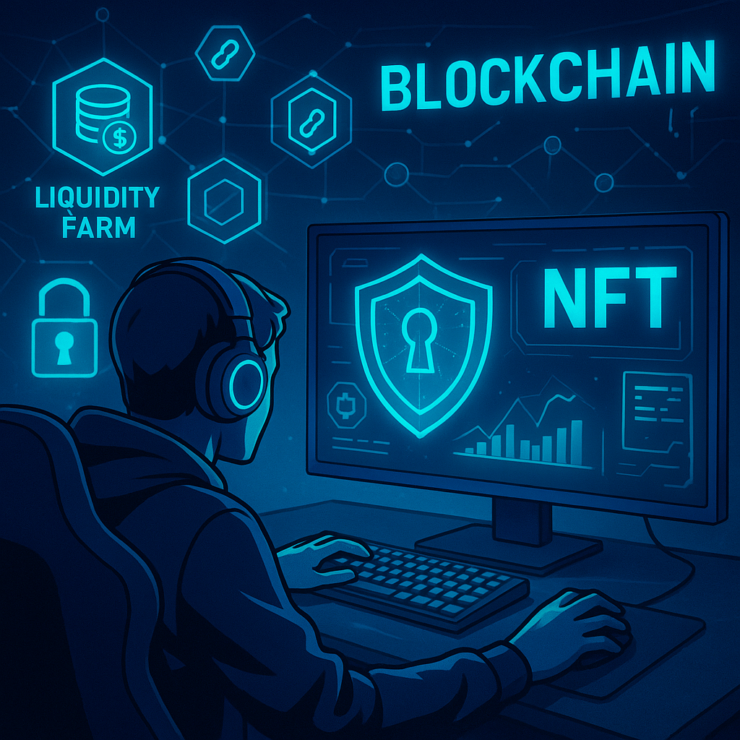


The advent of blockchain technology and cryptocurrency has not only disrupted the financial world but also opened new avenues for innovation, investment, and economic growth. Among such groundbreaking advancements, ‘Decentralized Finance’ or DeFi takes center stage. One DeFi ecosystem that has captured significant attention is Ethereum. In the paragraphs that follow, we unravel the complexities of the Ethereum DeFi ecosystem: its operation, benefits, and pitfalls.
Understanding Ethereum’s DeFi Ecosystem
Ethereum, the brainchild of Vitalik Buterin, is a public blockchain platform that brought forth the concept of smart contracts. A key component of Ethereum, DeFi, refers to a suite of financial applications built on top of the blockchain protocols.
Ethereum’s DeFi ecosystem enables a plethora of financial services, such as borrowing, lending, trading, and investing, in a decentralized, transparent, and secure environment. It does away with the need for intermediaries like banks or brokers, providing high financial inclusivity and efficiency.
The Operation and Components of Ethereum’s DeFi Ecosystem
The Ethereum DeFi ecosystem functions through DApps (Decentralized Applications) that operate on smart contracts. These DApps enable straightforward peer-to-peer transactions without intervention from a central authority.
There are several key players in the Ethereum DeFi space, including but not limited to:
1. MakerDAO – Provides DAI, a stablecoin, and allows users to lock in digital assets as collateral to generate loans.
2. Uniswap – A popular decentralized exchange facilitating seamless trading of Ethereum-based tokens.
3. Compound – A decentralized lending platform allowing users to earn interests or borrow against collateral.
4. Aave – A decentralized lending and borrowing protocol that introduces the concept of ‘flash loans’.
Advantages of the Ethereum DeFi Ecosystem
The Ethereum DeFi ecosystem offers numerous advantages, such as:
- Interoperability and Programmability – Ethereum’s DeFi applications can seamlessly interact due to the standardization of interfaces. The programmability of DeFi protocols allows innovation and financial automation.
- Transparency and Accessibility – All transaction data are accessible on Ethereum’s public ledger, promoting transparency. DeFi protocols are accessible to anyone with an internet connection, fostering financial inclusivity.
- Earning Opportunities – DeFi platforms provide earning opportunities through yield farming, staking, and liquidity provisions.
Drawbacks and Risks in the Ethereum DeFi Ecosystem
Despite its advantages, the Ethereum DeFi ecosystem is not without its risks and drawbacks. The system suffers from high gas fees, network congestion, and scalability issues. Furthermore, smart contract vulnerabilities can lead to significant losses in user funds, as seen in various DeFi hacks.
Conclusion
Ethereum’s DeFi ecosystem is a revolutionary stride in realizing the promise of blockchain technology for decentralizing finance. By replacing traditional financial intermediaries with automated, interoperable protocols, Ethereum’s DeFi offerings inherently provide enhanced accessibility, efficiency, and transparency. However, the unpredictable risks and technical challenges that accompany this innovation cannot be ignored.
It’s imperative for potential participants to thoroughly understand the operational intricacies and associated risks before venturing into the Ethereum DeFi ecosystem. As the technology matures, one can hope for a more scalable, secure, and user-friendly decentralized financial world.